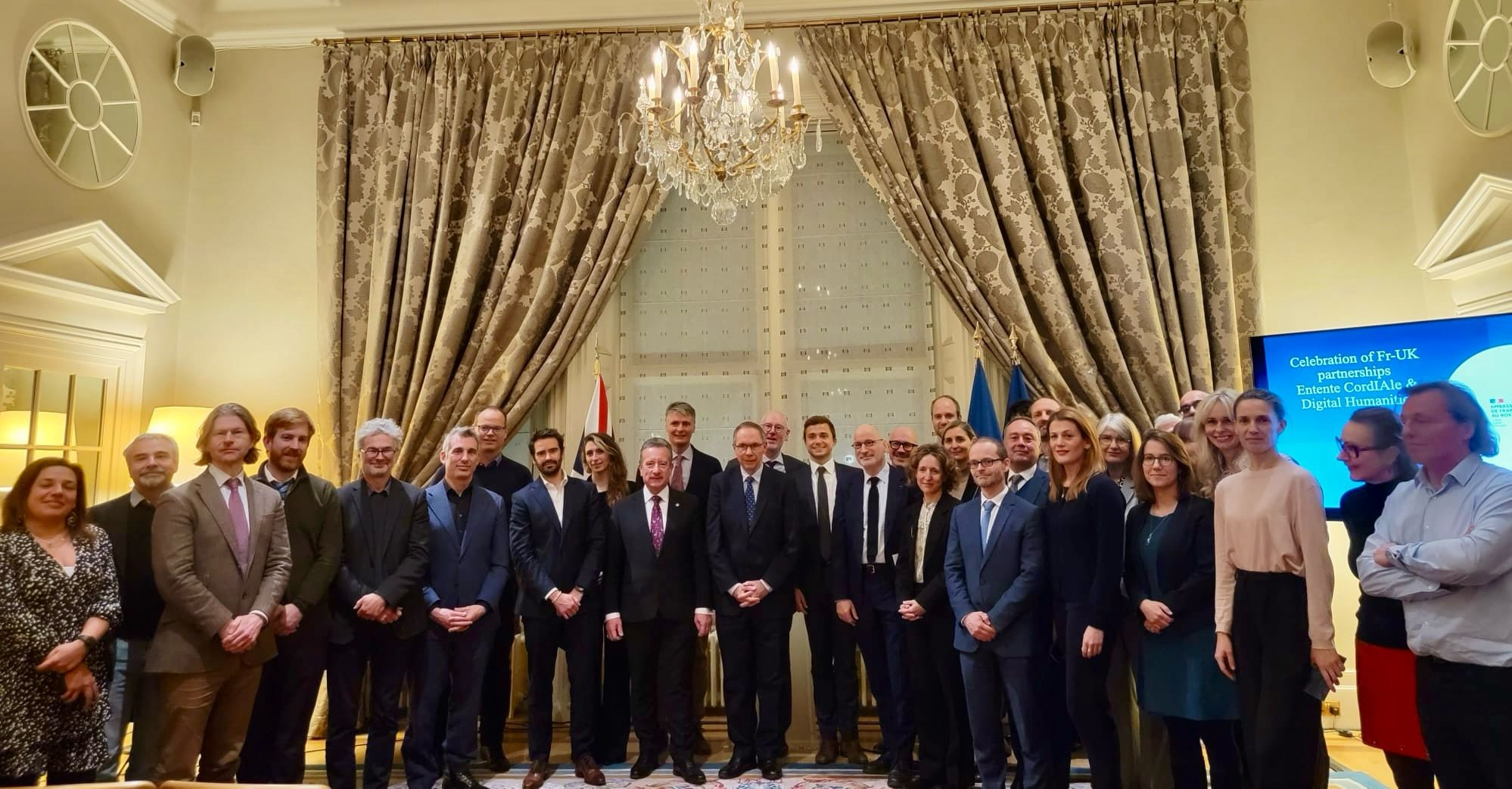
Our neighbours France and the UK announced a Franco-British AI collaboration a few months ago dubbed the Entente CordIAle. Last week we held a couple of days of workshops with our Oxford and French buddies deep diving into details of what a partnership might actually involve; a particular pleasure with France given my group's long history of working with Inria on OCaml and other open source projects.
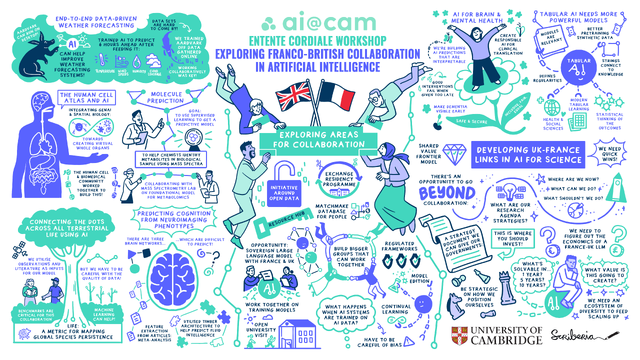
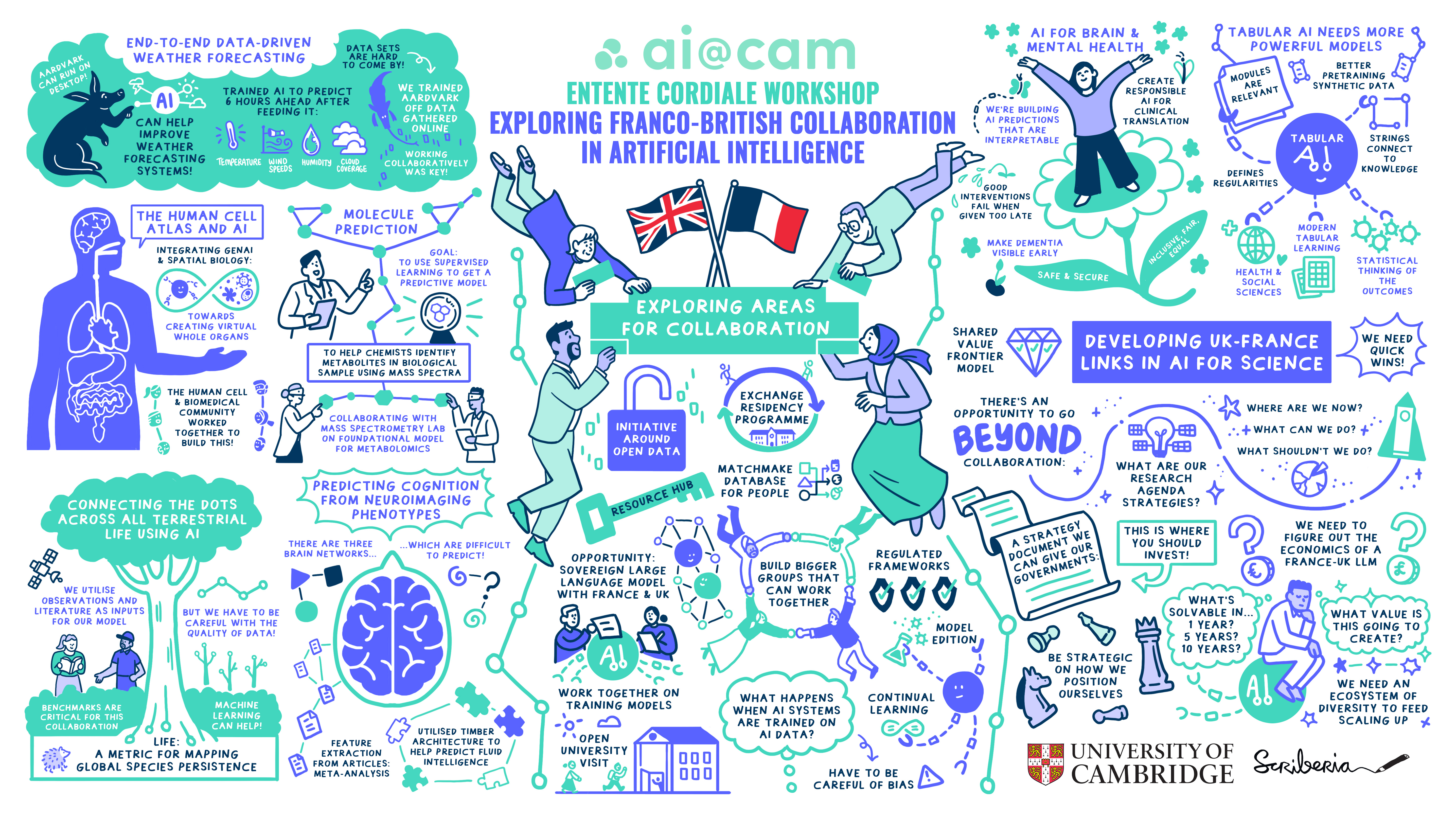
I sprinted back from Birmingham to speak about our research on connecting the dots on terrestrial life via TESSERA, LIFE, food and the scholarly literature. The other talks were vastly ambitious, best summarised in the Scriberia visual:
There's a great blog post from AI@CAM (who hosted the workshops on our Cambridge end) on how AI is changing our practise of science:
On 20 November, as part of an emerging UK-France collaboration in AI, ai@cam brought together researchers working at the intersection of AI and science. The conversation moved across different problems: how do you forecast weather without traditional numerical weather prediction? How do you model how a drug affects tissue structure? How do you predict molecular structures from mass spectrometry data? How do you quantify the extinction impact of agricultural land use? How do you extract reliable insights from the neuroscience literature? How do you diagnose dementia earlier? These aren't separate questions. They're connected by something deeper: a rethinking of how the scientific pipeline works, from data to actionable insight. -- How AI is Changing the Practice of Science, AI@CAM, Nov 2025
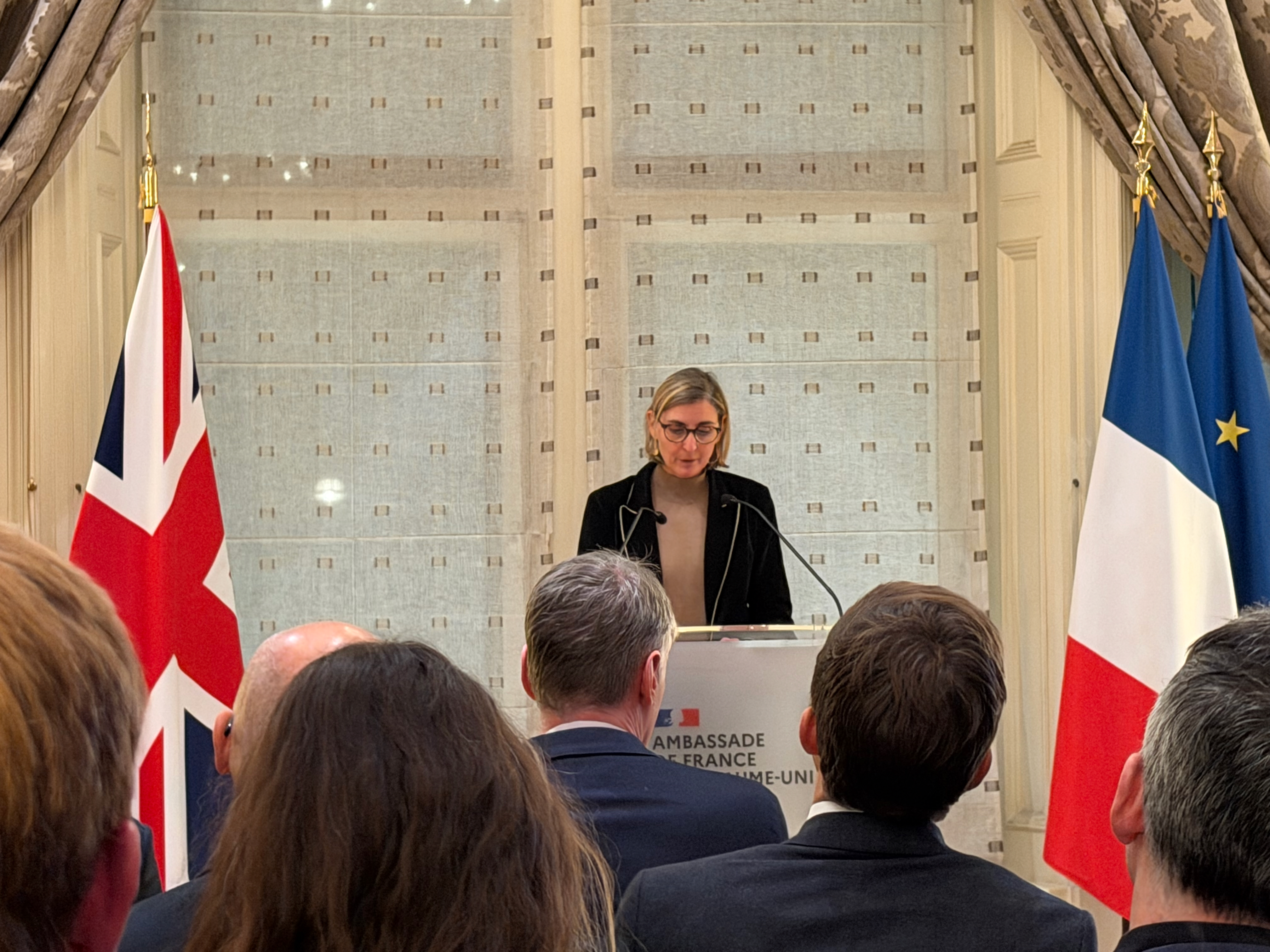
One of my favourite talks was related to open-source; I hadn't realised that the scikit-learn project that's used widely in machine learning actually began as a Google Summer of Code project and then incubated by Inria Saclay subsequently. Gaël Varoquaux gave a fantastic overview of his interest in machine learning for tabular data, which struck me as a similar argument to Shriram Krishnamurthi making the case for data-centricity in teaching.
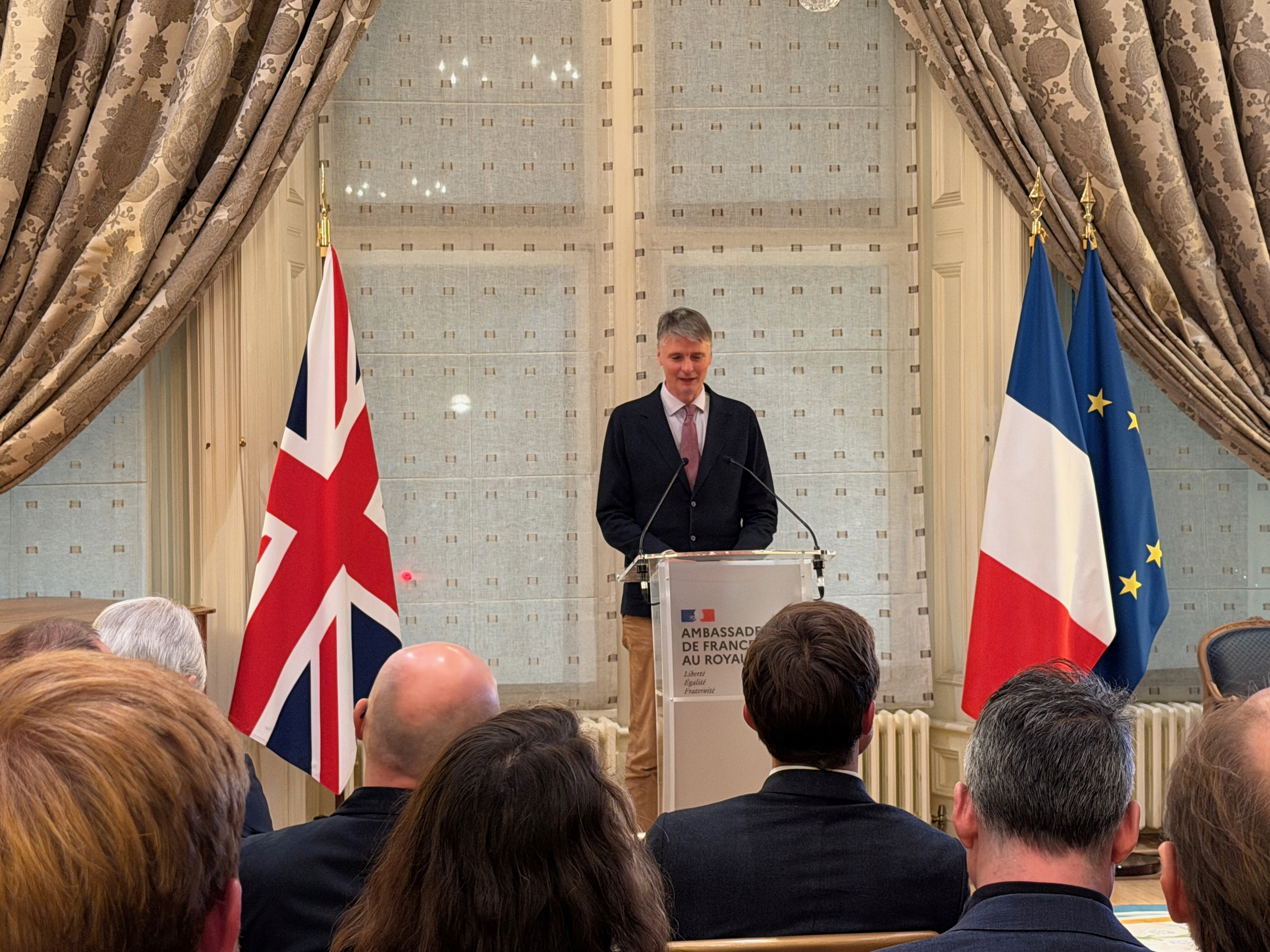
After this, we had a formal reception at the French Embassy in London hosted by Her Excellency Hélène Tréheux-Duchêne, Ambassador to the United Kingdom. It was as posh as you may expect, and Neil Lawrence represented Cambridge with a splendid speech about the importance of soverignity and openness in this age of frontier AI.
I also enjoyed meeting my counterparts from Oxford to learn more about their own work. In particular, Sandra Kiefer gave me some interesting reading on her recent work in complexity theory and algorithms, which I need to get up to speed on!
1 Followup funding for Conservation Copilots
Subsequently, I'm also grateful to AI@CAM for giving our Conservation Evidence Copilots project followon funding to help develop the "Conservation Co-pilot: Making Environmental Evidence Accessible", lead by Sam Reynolds:
With over 1 million users already accessing the Conservation Evidence database, this project will develop the first ‘Conservation Co-pilot’ – an AI-powered chat interface that retrieves, summarises, and presents conservation evidence to answer user questions. The challenge is ensuring that AI faithfully represents scientific evidence without misrepresentation. Building on rigorous evaluation research comparing frontier AI models with human experts, the team will create an agentic system that draws together evidence while maintaining faithfulness to source material. The tool will be game-changing for conservation decision-makers seeking evidence to guide action. -- Seven New AI-deas Projects Advance AI for Science, Citizens, and Society, 2025
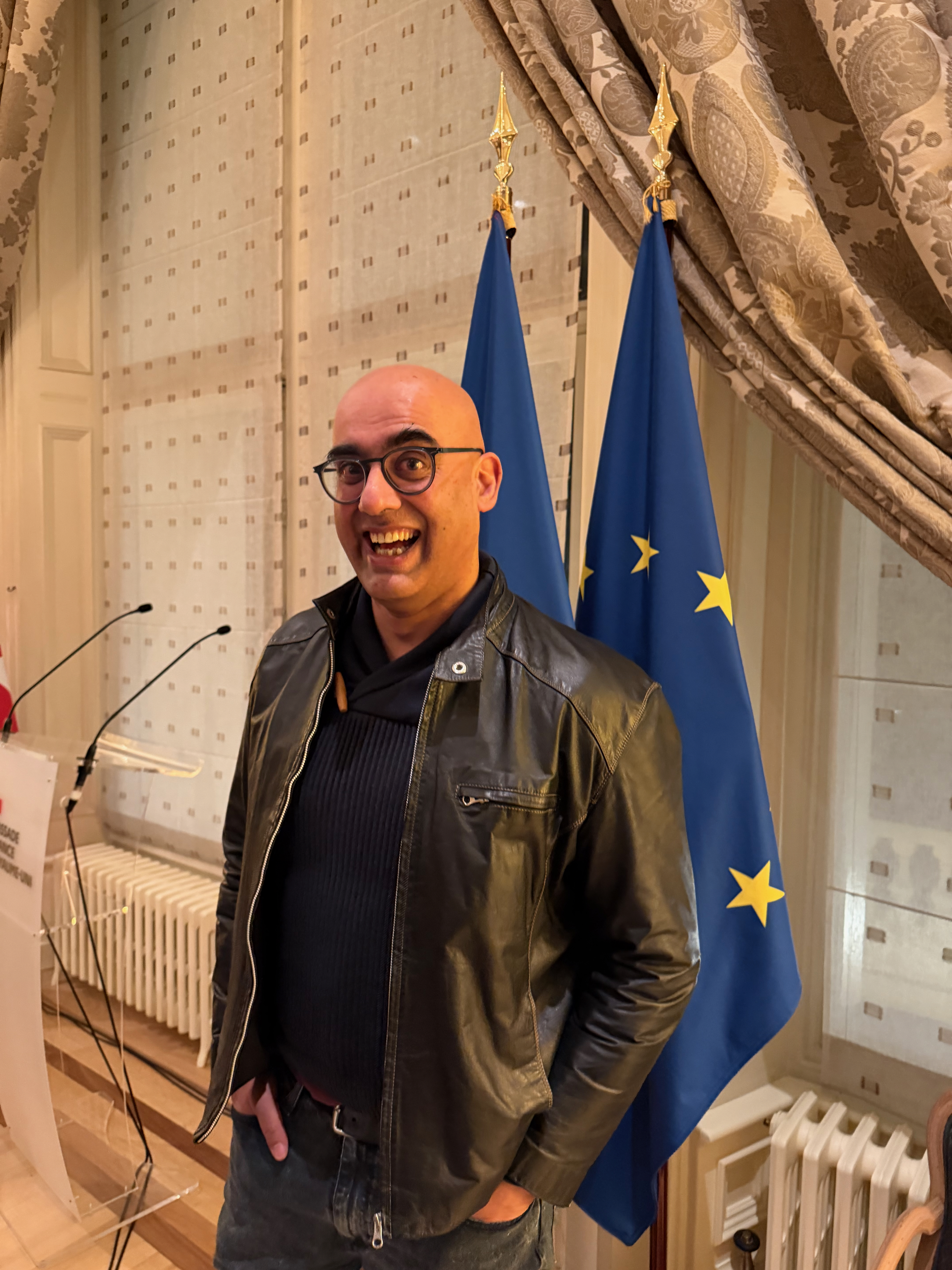
Read more about this from the French contingent and the LinkedIn post from Alec Christie, who also evangelised our Conservation Evidence Copilots project extremely well across the event!. While I've enjoyed the recent diplomatic visits from India as well, I am also glad to be able to sit down and do some hacking this week when things are a bit quieter.
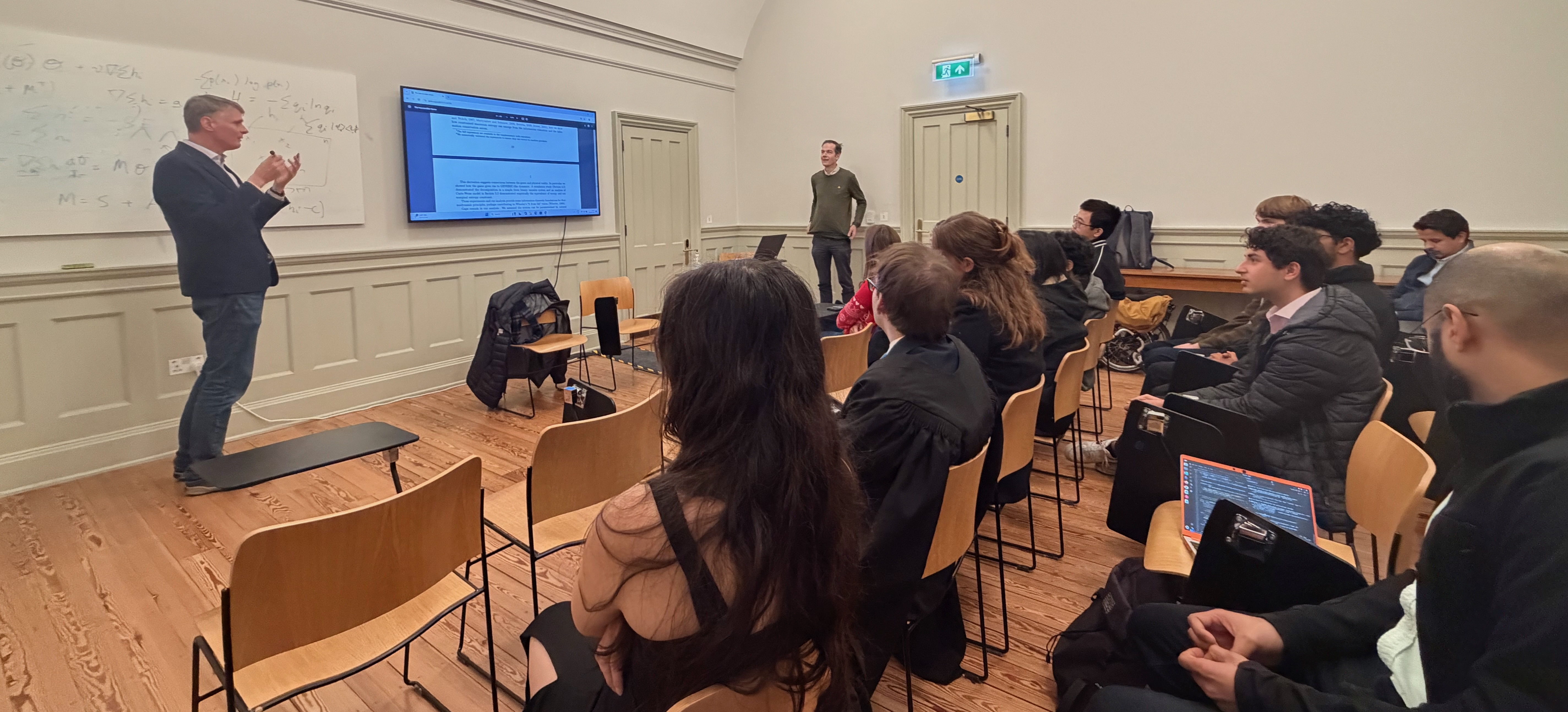
Carl Henrik Ek and I are also very grateful to Neil Lawrence for taking the time to sketch out the logic in his recent paper on The Inaccessible Game to our undergraduates at Pembroke after this event as well. It was a heady mix of thermodynamics, information theory and GENERIC in the best possible way!