
1 REDD+ over-crediting in Nature Communications
Our paper on learning lessons from over-crediting in REDD+ projects came out this week in Nature Communications, led by Thomas Swinfield. The reception to the paper has generally been encouragingly positive, especially with the framing that "bad credits are not the same as bad projects".
The timing of the paper hits the carbon market at a particular low time, since it's reeling from Microsoft's abrupt retreat from carbon removals meaning that the single largest buyer of removals is scaling back its commitments from just a few months ago. While this hits the whole stack of direct-air-capture pipelines through to nature-based projects, at least it can hopefully rebuild now with nature and technological removals/avoidance working in harmony rather than bickering about which specific method is 'the best'.

We need them all, and I think the necessary response should be to raise the floor on both at once, and not try to pick a winner. The Cambridge University and Computer Lab writers have done a great job carrying that point through, and I've written up my own full argument for those who want to dig in.
2 The inevitable rise of LLMs in government decision-making
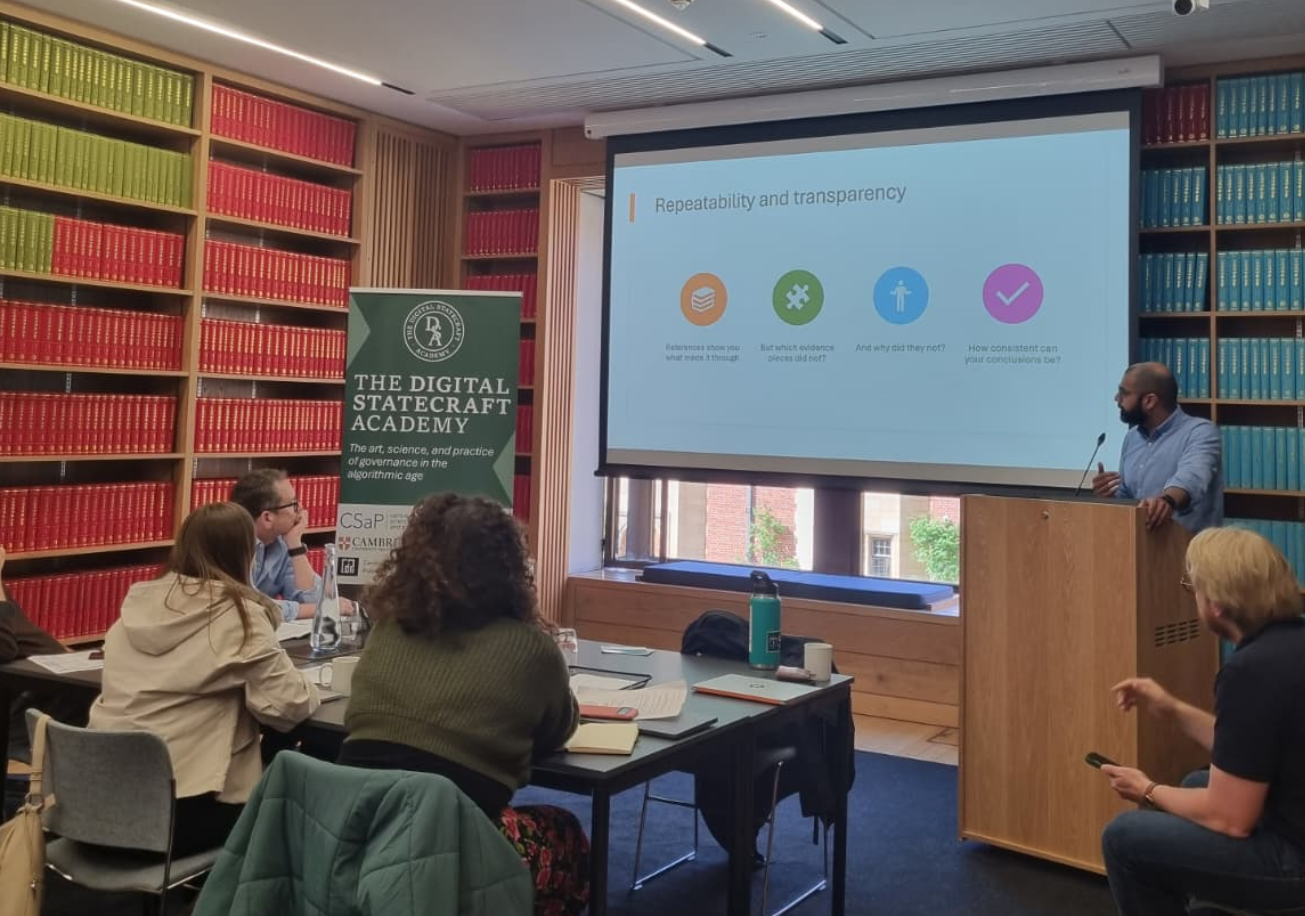
Sadiq Jaffer and Sam Reynolds also gave a great talk at the Digital Statecraft Academy on our evidence synthesis work, on "The inevitable rise of Large Language Models in government decision making". Civil servants and policy folk in the room were asking practical questions about how to do the right thing. There were questions about best practices for reducing hallucinations with responses discussing retrieval grounding, structured outputs, human-in-the-loop checkpoints, and maintaining proper evaluation harnesses.
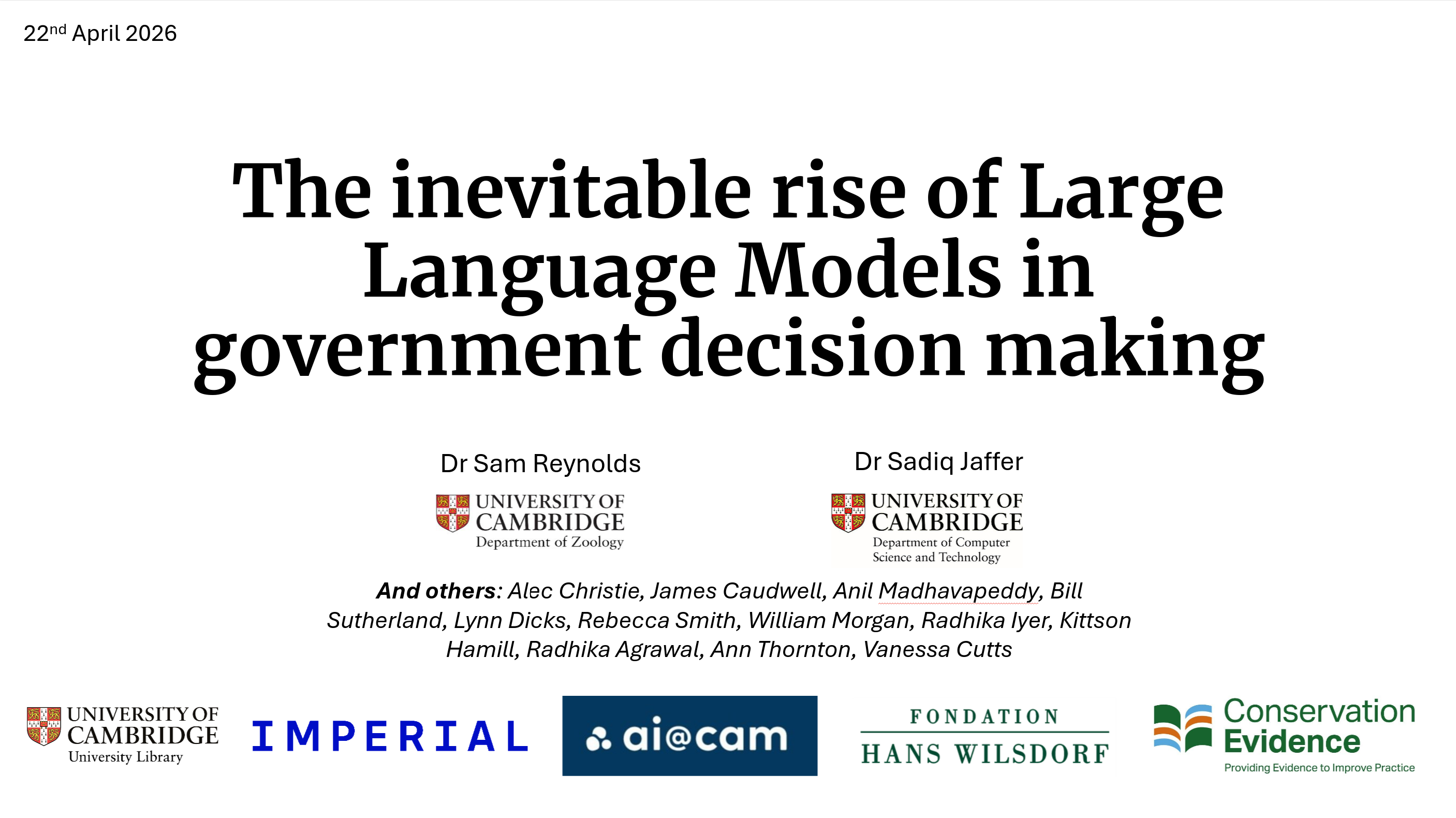
Then there were concerns about the computational and power crunch to keep all of this affordable as adoption scales across government. We discussed the use of smaller specialised models, on-prem inference for sensitive workloads, and the open question of whether the UK has the data-centre capacity to host serious sovereign deployments. The third was on whether quantum computing changes the picture (quick answer: no).
Just as this was all happening, the government announced Google had won a tender for planning-decision automation. English councils are trialling a Google AI tool to speed up planning, which is precisely the kind of black-box deployment my red-pill/blue-pill argument was cautioning against. Decisions affecting people's homes are now being filtered through opaque models with no public scrutiny of the reasoning chain.
If there's a bright spot, it's that the questions from the Statecraft audience suggest civil servants increasingly understand this, and the government itself is dispatching more contracts to UK firms in other sectors. We'll get there with the open AI story...
3 Hacking updates
3.1 Cyrus visits to talk Hazel
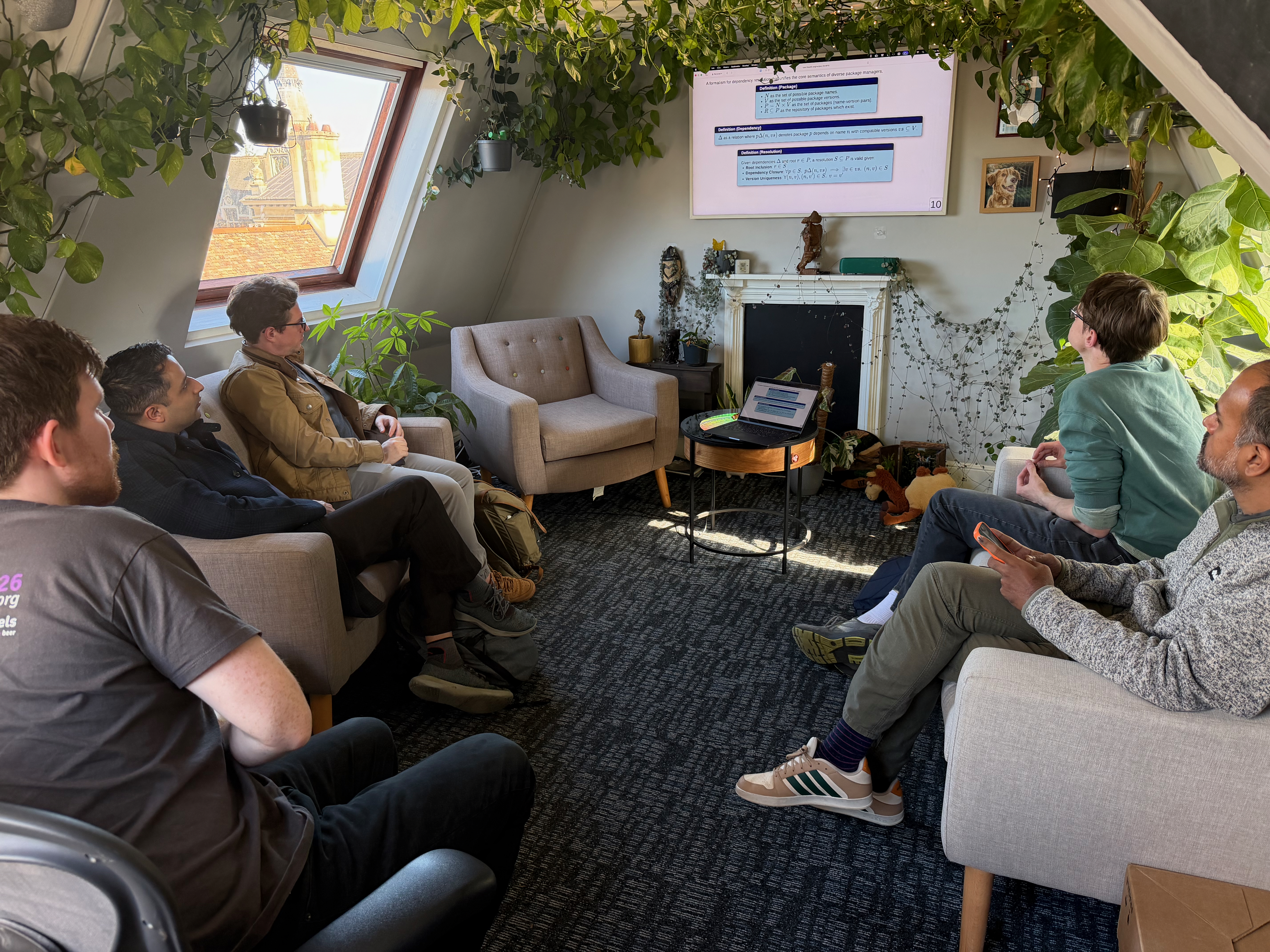
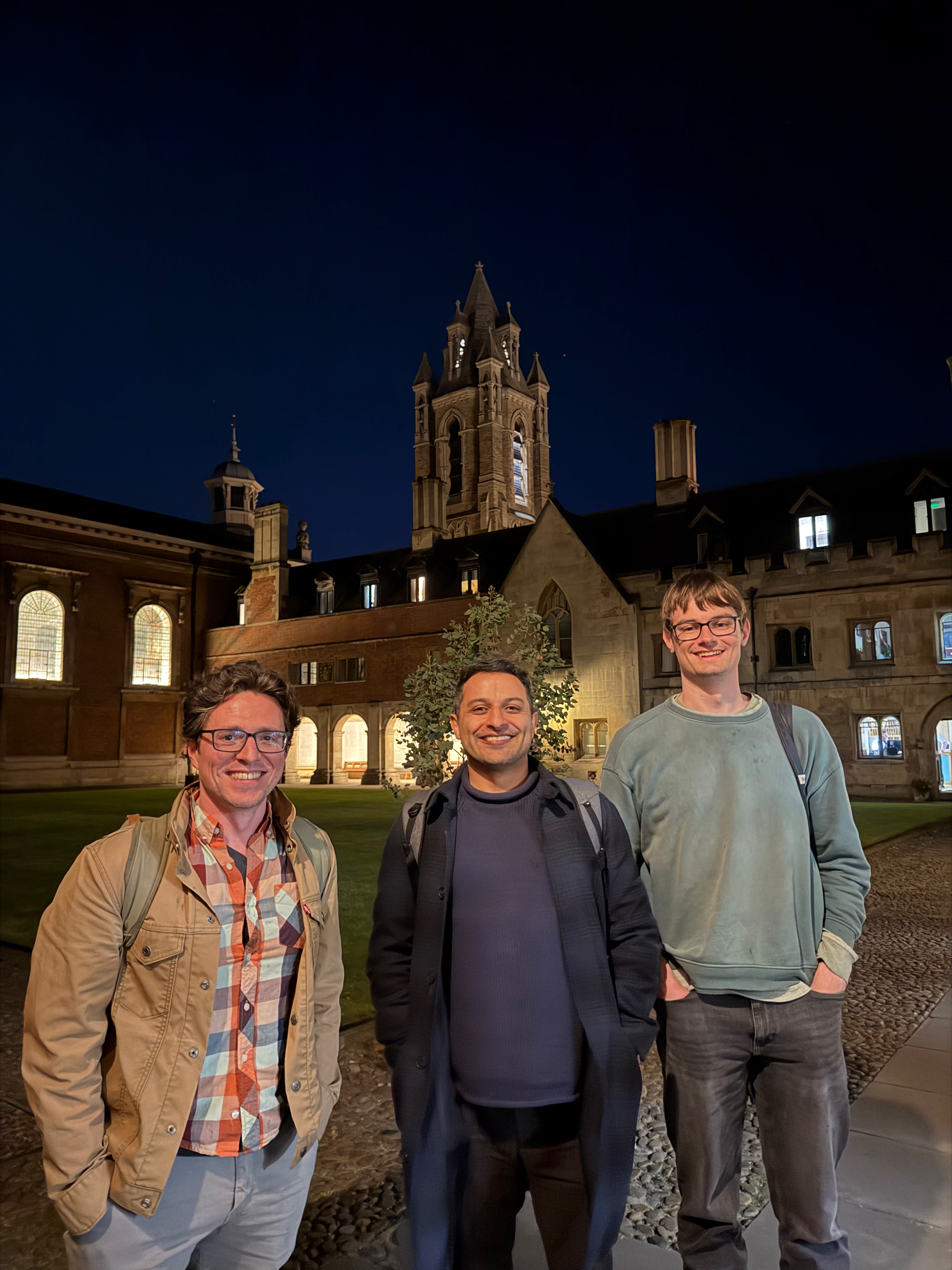
The week started with a fun visit from KC Sivaramakrishnan (over for a PaPOC keynote), Cyrus Omar, Andrew Blinn and Matthew Keenan (formerly an undergrad here at Cambridge, now doing a PhD over with Cyrus in UMich).
We all sat down with Ryan Gibb to brainstorm over ideas for how to combine recent advances in Hazel with the OxCaml work going on around here.
4 oi gains self-update
I've been making steady progress on oi, the
uv-style binary distributor I started working on a few weeks ago,
and have been dogfooding it with a few others. Mark Elvers and I have been cross checking
that our tools are compatible while doing OCaml maintainance.
The big new feature this week is oi self update. Having distributed binaries via oi for a few weeks, the next obvious
step was for oi itself to become one of the binaries it updates. This makes
pushing fixes much less painful, and brings it closer to self-hosting itself.
The two features I really want oi to nail at this point are:
- how to quickly run a binary in the uv style where you don't install anything. I've added
oixfor this now, so thatoix utopjust works — backed by source tracking and a local cache. - easy static-binary builds so you can ship a single binary that runs anywhere without thinking about which libc/arch the target is on.
oihandles this by shelling out to Docker for the static-build pipeline. I'm still working on wiring the binary builds through so that it just works (and I need to investigate fat binaries to see if they're worth it, but I'm guessing not). - updates as a library, so that binaries can evolve
I've also been hacking with Thomas Gazagnaire to merge his monopampam tree back into the agentic-libraries trees from last year. Thomas has been doing an enormous amount of new coding for space protocols and has built a lovely CCSDS protocol stack. I've merged almost all of his changes back into my OCaml trees, and will look at OxCaml merges next. More on this mega monorepo as it stabilises in the next few weeks!
5 Fun Links
- From the Slate Political Gabfest, I learnt that the number of words we are speaking per day is dramatically shrinking. Read the full study.
- As Github crumbles the Tangled team shipped the reputation system I've always wanted since Advogato. Check out my vouch ATProto records here!