Happy new 2026 everyone! I've had a wonderful journey through Udaipur and the lake palaces, and am currently in Vijayawada exploring my ancestral village for the next few days. I've caught up on some reading, so here are my book thoughts (and podcasts for the first time) from the past year!
1 Inspirational: Moral ambition
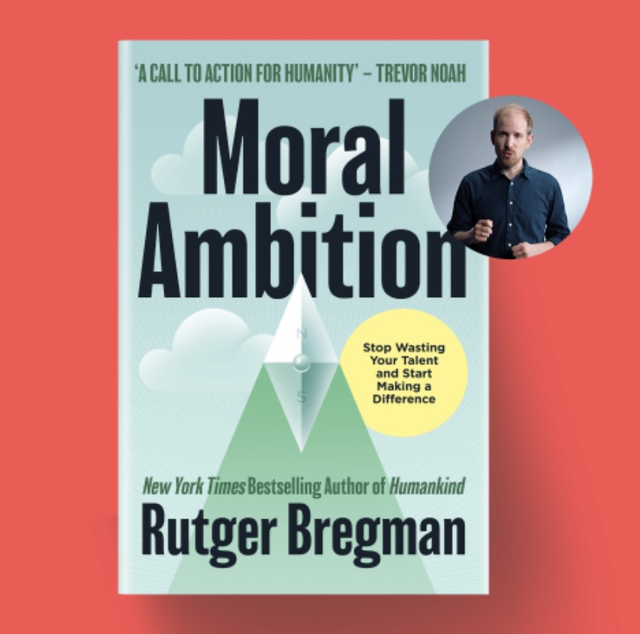
I thoroughly enjoyed listening to the BBC Reith lectures this year by Rutger Bregman, after hearing about them from Carl Edward Rasmussen. I picked up a copy of Bregman's new book Moral Ambition to read in my travels; it was a light read and I got through it all on the flight to India.
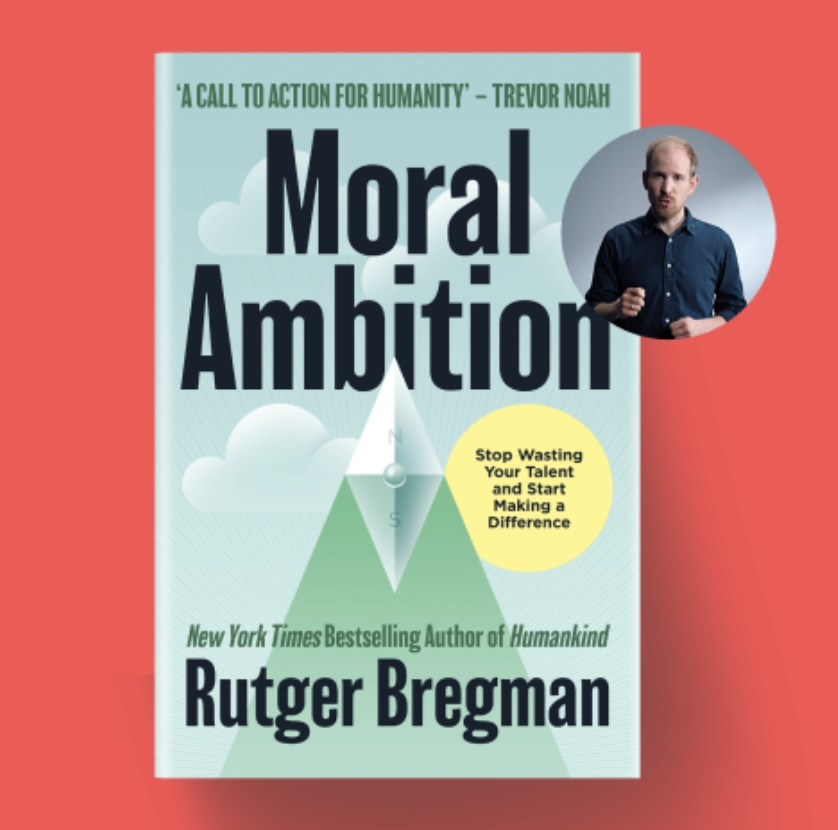
I enquired online if anyone else had read it, and Laura James nailed it with her assessment that it "looks like a classic airport book for business folk having a career crisis". Well, working in the climate and biodiversity space feels like a constant crisis, so I dove straight into it and ended up bounding off the plane with a spring in my step!
Bregman has written this book for a rather narrow audience. The key idea he pushes is that ambitious and idealistic young people shouldn't waste their lives on "bullshit jobs" (a term coined by the late David Graeber, author of the fantastic history of debt). He argues that it's possible to be both ambitious and moral in our careers:
Sometimes it seems 'ambition' has become a dirty word, incompatible with an idealistic lifestyle. Many people are more preoccupied with the kind of work they do than the impact their work has [...] or 'think global, act local' as if achieving little is somehow a virtue.
-- Moral Ambition, Ch2, Rutger Bregman
The book follows a style fairly typical of this class, whereby a number of anecdotes about morally ambitious characters from history (such as Ralph Nader before he became a perennial presidential candidate) are recounted. I particularly liked the breakdown of 'illusions' that cause inaction, such as the illusion of awareness that we've run across in our research on food consumption impacts :
Psychologists speak of the "belief-behaviour" gap. Take people who think it's awful how animals are treated but still eat meat; progressives who think planes are too polluting but fly all the same; church-goers who scarcely give to charity, despite the scriptures' call to tithe.
-- Moral Ambition, Ch4, Rutger Bregman
And then the illusion of good intentions that we've seen repeatedly in our work on conservation evidence and in climate policy. There is a huge lack of evidence driven decision making, possibly due to the extremely difficult job of robustly evaluating counterfactual decision making:
A global analysis of 1,500 climate policies put in place between 1998 and 2022 found that only 63 of them – a mere 4 per cent – led to a significant drop in emissions.
-- Moral Ambition, Ch4, Rutger Bregman
And something I've run across all the time in the open source community is the 'illusion of purity', whereby "activists continued to write each other off for all manner of minor missteps and mistakes" (ch4).
The most disappointing chapter of the book was where he covered the Effective Altruism movement in a strangely wavering tone. He tries to even-handedly cover the very strange community that built up around EA, and also criticise the pooling of wealth, but didn't really stimulate any new insights or critical thought in me. He does take a pragmatic stance on the status quo, which is understandable given the emphasis on action over awareness. I can't say that I disagree here either, given the number of absolutely amazing philanthropists I've been lucky to work with on my own research:
The truth is that money and moral ambition need each other. Philanthropy doesn't have to get stuck in vanity and paternalism. It can lead to real systemic change, as long as you prioritise wisely and keep an eye out for damaging side effects. What's more, private individuals are in a unique position to support unpopular causes – when government and business steer clear.
-- Moral Ambition, Ch8, Rutger Bregman
Pushing on beyond that, though, I greatly enjoyed the author's own ambition in setting up a School for Moral Ambition and promoting the idea of creating moral ambition circles. This is pretty close to the sort of thing we think about day-to-day in our university environment anyway, so I hope to find Carl Edward Rasmussen and set one up in Cambridge when I'm back next year (if there isn't one we can already join).
2 Entertaining non-fiction: This way up
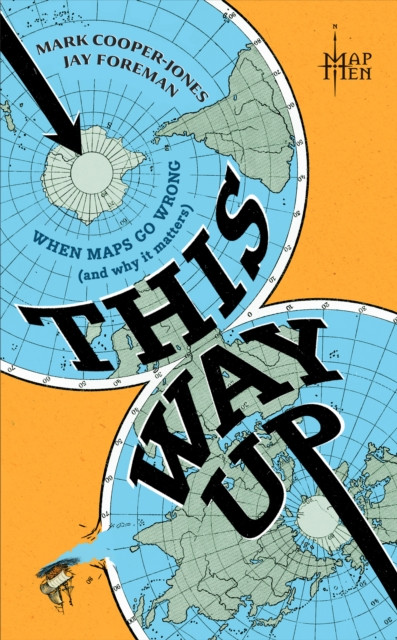
For something less heavy, I weaved through "This Way Up: When Maps Go Wrong" by the famed Map Men. This is an irreverent walk through all the extremely weird ways humans have come up with to project a 3D topology onto a 2D surface.
This included the fun psychogeography movement from French surrealists who cut up a map of Paris and rearranged it with parts of Paris that were "stimulating" and "worthy of study" with giant arrows between them to represent the teleportation to the most exhilarating areas. Perhaps we need to draw a similar 'a bicycling birders guide to Cambridgeshire' in 2026!
3 Best scifi: When there are wolves again
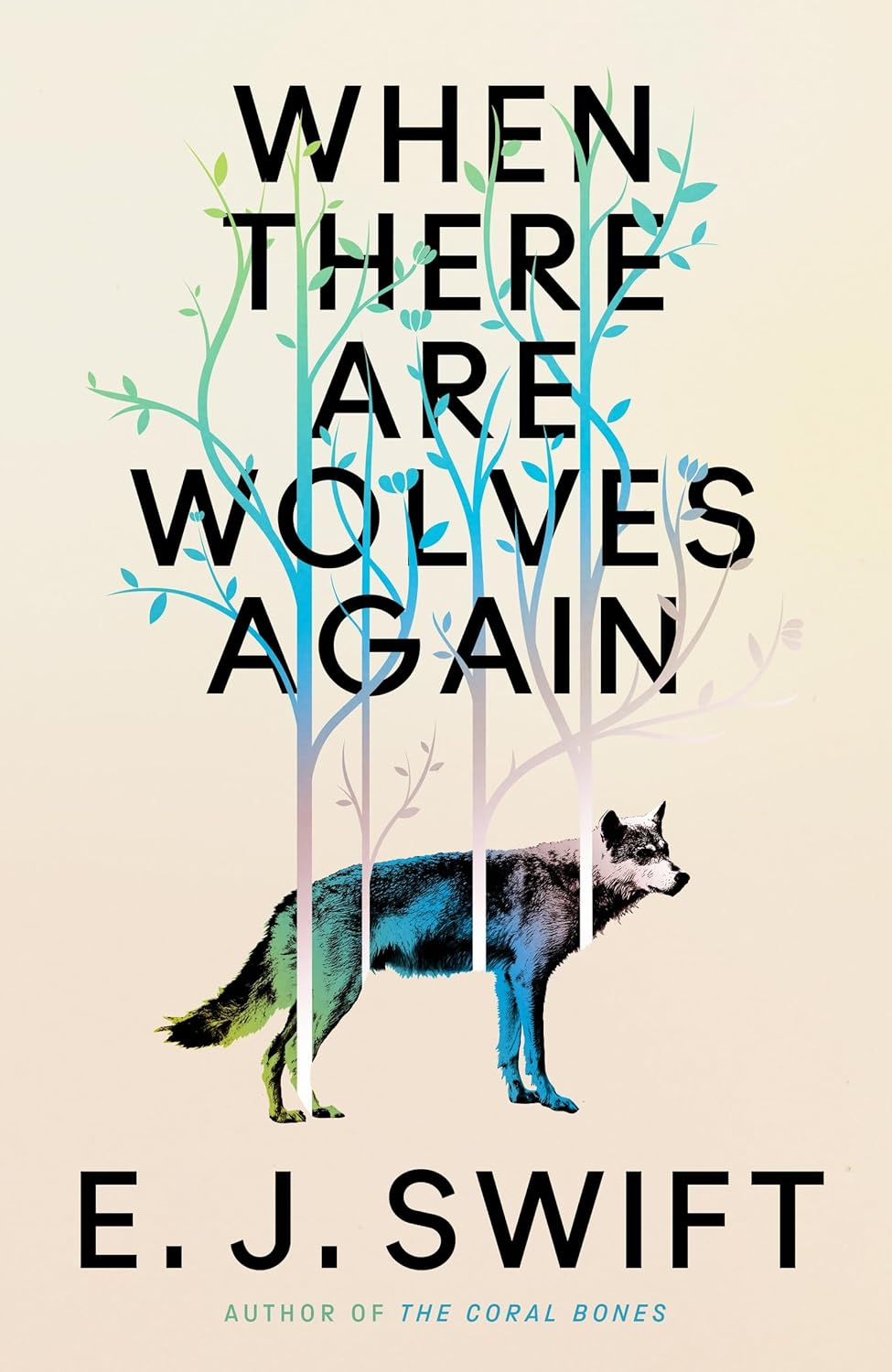
I'm only halfway through "When there are wolves again" by EJ Swift, but it's SO GOOD so far that I had to include it. It combines some of my favourite topics about restoring depleted ecosystems and exploring space in one book. Something I've often discussed with David Coomes are the challenges around reintroducing wolves to Scotland; a real source of tension between conservationists (who want to get rid of deer) and the farmers (who quite reasonably don't want their livestock eaten by roving wolves).
This also has a storytelling format of having two narrators chatting to each other, and maintains a really narrow and hopeful focus. You might notice I'm dosing up on optimism to charge myself up for 2026, so thank you Jon Crowcroft for recommending this one to me!
4 Best book I finally finished: When the sparrow falls
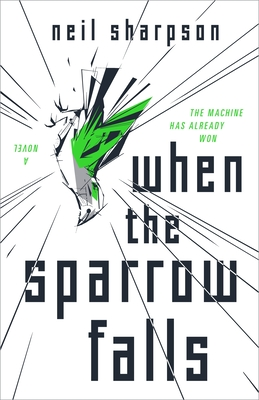
We can't be too optimistic and lose touch with reality, so a brilliant novel that I lost behind my sofa but found again in November is "When the Sparrow Falls" that has has an entertaining (but getting awfully close) take on AI agents.
In the fictional Caspian republic, the rest of the world has been infected by AI governance, one small nation resists being overtaken and outlaws digital technology. Anyone has to be checked to see if they're human at the borders, and the books opens with the autopsy of an unfortunate high-ranking government official revealing that they're an AI. The rest of the book is dark humour, bleak worldbuilding, and mystery at its finest. Not a cheerful book though...
5 Best thought-provoking recommendation: Prisoners of geography
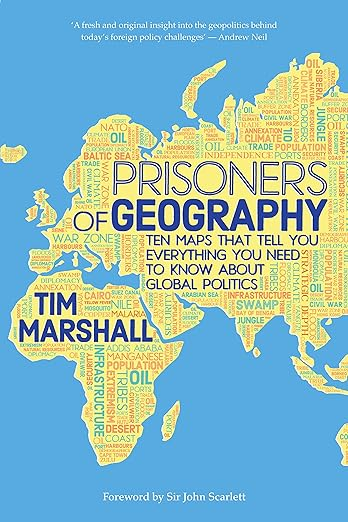
Thank you Isobel Cohen for recommending "Prisoners of Geography" which is a decade old now, but a fascinating view on geopolitics just before Trumpian politics took over. Tim Marshall argues that no matter how much technological progress is made, a dominant force in politics will always be geography.
I don't actually agree with it at all though. This summer I went to Botswana where I found a country that had a terrible outlook when it achieved independence: no capital reserves, surrounded by hostile apartheid regimes, and with mineral wealth that usually lead to invasion or takeover. But today, Botswana has one of the highest life expectancies and most stable governments in Africa.
The same is also true in Costa Rica, having built up a solid ecotourism industry. But I did find the framework of Tim Marshall's argument to be well worth reading, and I've queued up his 2023 book on the politics of space to read this year.
6 Best gift: Chennai the history
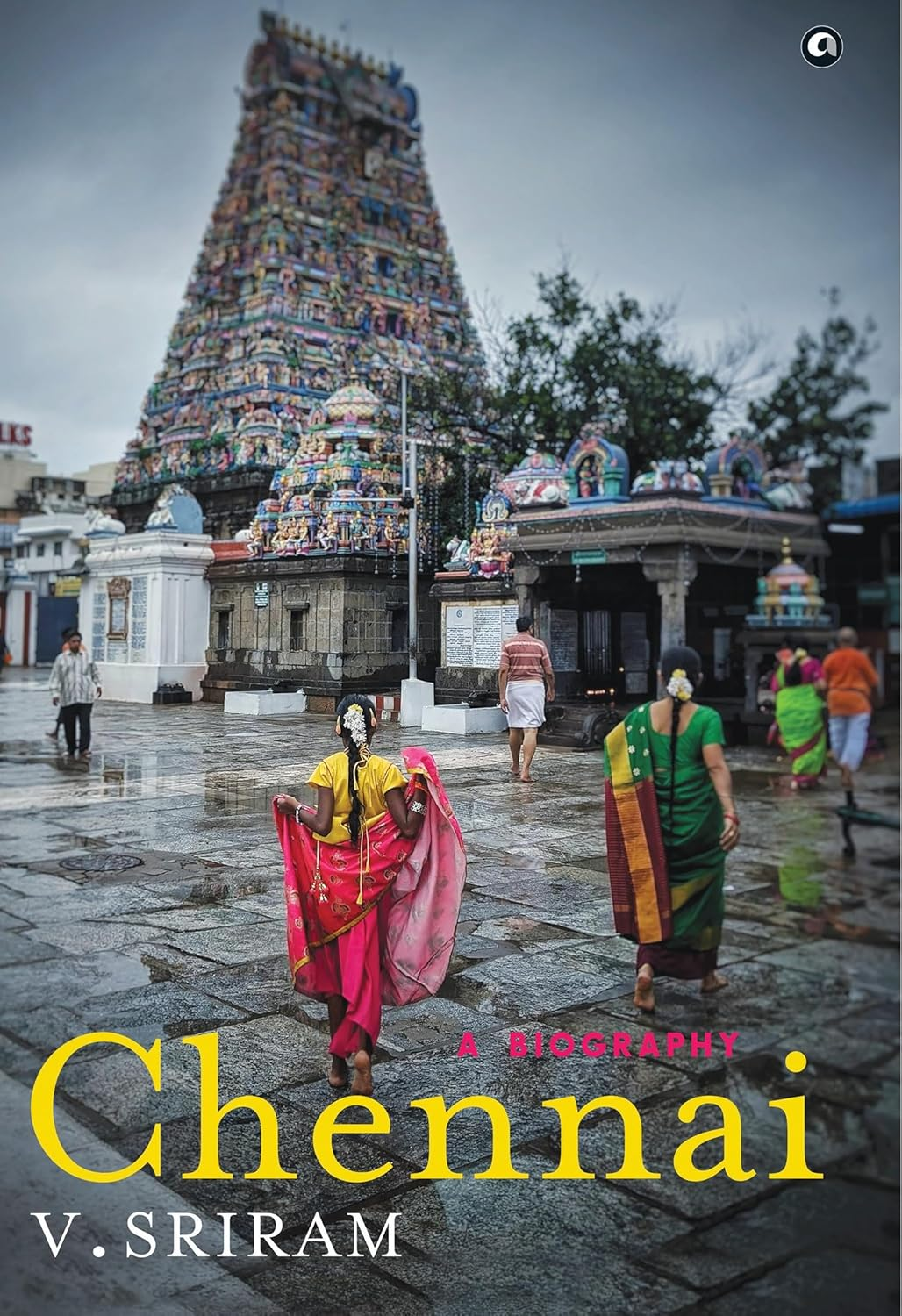
I used to live in Chennai way back in 1990 after the Gulf War chucked us out of Kuwait, and KC Sivaramakrishnan gave me a copy of Chennai: A Biography when I visited him earlier in the year.
Madras is a city of so many "firsts": the first Indian corporation, the first army regiment. But I had no idea that the bookshop that I used to hang out in 36 years ago finding all the maths books I could devour, called Higginbotham's, is actually the oldest bookshop in all of India! A brilliantly engaging piece of history from V. Sriram who apparently leads heritage walks through the city that I must catch on my next visit.
7 Best non-tech podcast

I greatly enjoyed tuning into "Solving for Climate" from my favourite climate optimists Hannah Ritchie and Rob Stewart! They've got a nicely balanced set of science and society oriented episodes, with some of my favourite being:
- "Rahul Tongia: Is India on track to meet climate goals?" (Dec 2025). I listened to this in India while watching an episode of my colleague Bhaskar Vira appearing on Indian TV!
- "Ian McKay: How do we get rid of contrails?" (Sep 2025). The science behind contrails is fascinating, and we had to account for this in our carbon credits calculations in 4C when calculating the damaging effects of flying: it's not just the CO2e.
- "Mark Titley: How do we stop deforestation?" (Jun 2025). Trase is an absolutely incredibly organisation that's creating reliable supply chain maps, and we collaborated with them in our research on food biodiversity.
8 Best tech podcast: Signals and Threads
I might be biased as I've appeared on a previous season, but Signals and Threads has really developed into a solid series that manages to make listening about tech not boring (a crime that about 99% of other podcasts I've attempted to listen to have committed). After working on it all day, do I really want to listen to more tech while out for a run?
Yaron Minsky has hosted some unexpectedly fun episodes this year:
- The Thermodynamics of Trading (July 2025). You'd think that an hour of talking about cooling data centres would be boring, but this was my standout episode of the year! It kicks into high gear when Daniel discusses what he optimistically dubs "thermal events" (boom goes the rack), and dips into physics, alerts, layouts and all kinds of fun things.
- Building Tools for Traders (May 2025). For the terminal obsessors among you (I am looking at Ryan Gibb), this episode delves in just mouse-averse Jane Street is: "everyone at Jane Street has roughly fighter pilot eyes and they say, I want this to be about six pixels high because then I can see more of it on my screen. You’re designing these tools with extremely high information density". And indeed, I wasn't disappointed when I played with Bonsai Term a few weeks ago!
- From the Lab to the Trading Floor: Designing for Expert Users is actually from last year, but I only caught up with the season in 2025 so it counts! Erin Murphy formerly worked at JPL working on UIs for space missions, and she covers both the technical and cultural aspects of developer experience. One really neat trick JS does that I'd like to replicate here in Cambridge is "theres a channel that’s just alerting us when a person logs into the tool [...] we get their username, and we can easily find where they are in the office, and we can go up and talk to them". What an excellent idea for encouraging human-to-human interaction in the agentic craziness we will find ourselves in 2026!
9 First book to read in 2026: Katabasis
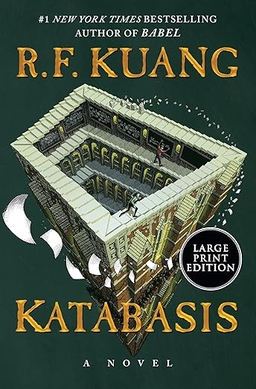
I've not actually read this yet, but thank you Sara Biswas for an effervescent review that got me really excited to pick this up on the way home! Katabasis is a novel published this year by RF Kuang (who studied at Cambridge) with a hilariously dark plot about two graduate students (and magicians) who must venture into hell to save their thesis advisor in order to get letters of recommendation. I shall reserve judgement until after I have read it, and indeed after I have completed all the recommendation letters I need to get done despite allegedly being on vacation. But with a setting like this, I can feel it's going to be good!
That's a wrap for my abridged reading recommendations for the year! I have a monster pile of unread books to attempt to catch up on this year, so I'll try to blog about what I'm reading more regularly than annually.